
English 


Author: Site Editor Publish Time: 2026-08-11 Origin: Site


The intraoral camera has become an essential diagnostic and communication tool in modern dentistry. From routine examinations to cosmetic consultations, high-quality intraoral images help dentists explain treatment needs, improve patient understanding, and maintain comprehensive clinical records.
As technology evolves, dental practices now face an important question: Should you choose a wireless or wired intraoral camera? While wireless models promise greater mobility and a cleaner workspace, wired cameras continue to dominate many clinics because of their stability and consistent performance. The best choice depends less on technology trends and more on your clinical workflow, patient volume, and documentation requirements.
This guide compares wireless and wired intraoral cameras from a practical perspective, helping dental professionals select the solution that best supports everyday practice.
Both wireless and wired intraoral cameras perform the same essential function: capturing high-resolution images inside the patient's mouth for diagnosis, documentation, and patient communication.
The primary difference lies in how images are transmitted.
A wired camera connects directly to a computer or monitor through a cable, most commonly as a USB intraoral camera. Wireless models transmit images using Wi-Fi or proprietary wireless technology to a receiver, computer, or monitor without requiring a physical cable during operation.
Although both produce high-quality clinical images, the user experience can differ significantly.
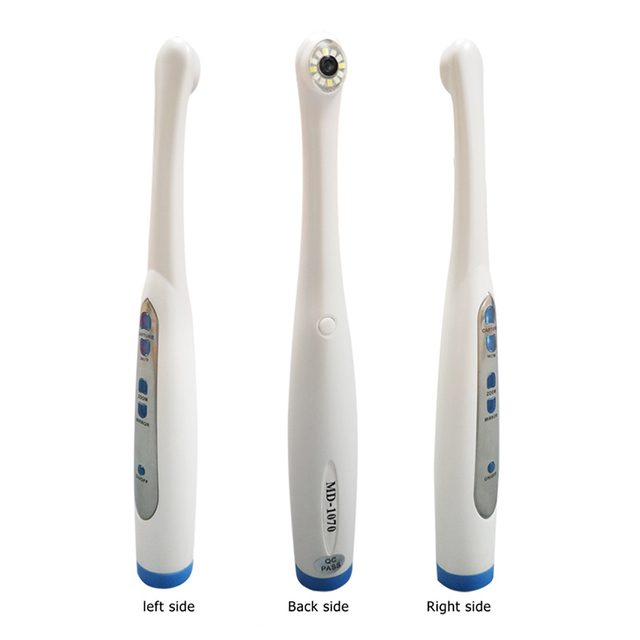
One of the biggest advantages of a wireless intraoral camera is freedom of movement.
Without cables attached to the handpiece, dentists and hygienists can easily move around the patient, switch between operatories, and reduce cable clutter around the dental chair. This flexibility is particularly valuable in busy clinics where equipment is frequently shared.
However, wired models remain the benchmark for reliability.
A USB connection provides continuous power and stable data transmission without concerns about wireless interference or battery life. In high-volume practices where imaging is performed throughout the day, uninterrupted performance is often more important than mobility.
For practices with fixed treatment rooms, many clinicians find that a wired system offers a more predictable workflow.
A common misconception is that wireless cameras produce lower-quality images.
In reality, image quality depends on factors such as:
Sensor quality
Lens design
LED illumination
Autofocus technology
Image processing
A high-quality Auto focus intraoral camera can deliver excellent clinical images whether it uses a wired or wireless connection.
Modern autofocus systems automatically adjust focus while moving between anterior and posterior teeth, allowing clinicians to capture clear images quickly without manual adjustments. This improves efficiency regardless of the transmission method.
When comparing products, dentists should prioritize optical performance over connection type.
The best camera is the one that fits naturally into your existing workflow.
A wired camera is ideal for practices that emphasize digital documentation.
Images can be transferred directly into patient management software, making it easy to:
Create treatment records
Compare before-and-after cases
Support insurance documentation
Share images with laboratories or specialists
Because data transmission is continuous, there is little risk of connection interruptions during examinations.
Wireless cameras simplify movement throughout the operatory.
They work particularly well for:
Multi-chair clinics
Mobile dental services
Community outreach programs
Educational demonstrations
Without cables restricting movement, clinicians can comfortably position the camera while maintaining better ergonomics.
Regardless of connection type, intraoral cameras significantly improve patient education.
When patients can see cracked fillings, plaque accumulation, worn restorations, or fractured teeth on a screen, they gain a much clearer understanding of their oral condition.
Many practices combine their camera with an intraoral camera monitor system, allowing images to appear immediately on a chairside monitor. Real-time visualization encourages patients to ask questions and participate in treatment decisions.
Wireless cameras can make these demonstrations feel smoother because there are fewer cables around the patient, while wired systems provide equally effective image presentation once connected.
Ultimately, communication depends more on how the dentist uses the images than on the connection itself.
Long-term ownership costs should also influence purchasing decisions.
Wired cameras generally require less ongoing maintenance. Since they receive power directly through the cable, there are no batteries to replace or charging schedules to manage. Routine cleaning and proper infection control are typically all that is needed.
Wireless models introduce additional maintenance considerations, including:
Battery charging
Battery replacement over time
Wireless receiver management
Firmware updates
Network configuration when required
While these tasks are not difficult, they should be considered when evaluating the total cost of ownership.
Different clinical environments often benefit from different solutions.
Small private practices often prefer wired cameras because they provide dependable performance and seamless documentation without additional wireless management.
Large group practices may appreciate wireless models that can move easily between treatment rooms and improve workflow flexibility.
Teaching institutions frequently use wired systems connected to large displays for demonstrations and student training, while mobile clinics often favor wireless cameras because they reduce equipment setup time.
Practices planning future expansion may also consider systems that support both wired and wireless operation, providing greater flexibility as clinical needs evolve.
There is no universal winner because both technologies serve different priorities.
Choose a wired intraoral camera if your practice values:
Stable image transmission
Continuous power
Seamless software integration
High-volume daily use
Choose a wireless intraoral camera if your priority is:
Mobility
Cleaner operatories
Flexible room sharing
Portable clinical workflows
For many growing practices, hybrid systems that combine reliable documentation with flexible display options provide an ideal balance.
Wireless technology continues to improve, but wired intraoral cameras remain the preferred choice for many dental professionals because of their stability, simplicity, and dependable integration with digital workflows. Wireless models, however, offer outstanding flexibility for practices that value mobility and ergonomic efficiency.
Rather than asking which technology is universally better, the more useful question is which solution best matches your daily clinical routine. By evaluating workflow, patient communication, maintenance requirements, and long-term scalability, dental practices can confidently invest in an intraoral camera that improves both clinical efficiency and the overall patient experience.
Q: Are wireless intraoral cameras as reliable as wired models?
A: Modern wireless intraoral cameras are highly reliable for everyday clinical use. However, wired models generally provide more stable data transmission because they are not affected by battery life or wireless signal interference. For high-volume practices, wired systems often remain the preferred choice.
Q: Does a wireless intraoral camera produce lower image quality?
A: No. Image quality depends mainly on the camera's sensor, lens, lighting, and image processing technology—not whether it is wired or wireless. A high-quality wireless intraoral camera can deliver images comparable to a wired model.
Q: Is a USB intraoral camera better for digital record keeping?
A: Yes. A USB intraoral camera is typically easier to integrate with dental imaging software and electronic patient records. Images can be captured and stored directly within the practice management system, making documentation more efficient.
Q: Which type of intraoral camera is better for patient education?
A: Both wired and wireless cameras are effective for patient communication. When connected to an intraoral camera monitor system, either option allows patients to view high-resolution images in real time. Wireless models may provide slightly greater flexibility during chairside demonstrations.
Q: Do wireless intraoral cameras require regular charging?
A: Yes. Most wireless models use rechargeable batteries that should be charged regularly to ensure uninterrupted operation. Many manufacturers provide charging docks or spare batteries for continuous clinical use.
Q: Can a wired intraoral camera be moved between treatment rooms?
A: Yes, but it is generally less convenient than a wireless model. A wired camera must be unplugged and reconnected to another workstation or monitor, while wireless systems are designed for easier portability between operatories.
Q: Which type of intraoral camera is better for large dental clinics?
A: The answer depends on the workflow. Clinics that prioritize centralized documentation often choose wired systems, while practices that frequently move equipment between chairs may benefit from wireless models. Some larger clinics use both depending on the treatment room.
Q: Can I upgrade from a wired to a wireless intraoral camera later?
A: Yes. Many manufacturers offer newer wireless models or hybrid systems that are compatible with existing imaging software. Before upgrading, verify software compatibility and monitor connectivity to ensure a smooth transition.


