
English 


Author: Site Editor Publish Time: 2026-10-12 Origin: Site


Transitioning from subjective visual assessments to data-backed consultations is a critical revenue driver for modern aesthetic practices. Today's clients are highly educated consumers. They increasingly demand clinical proof before committing to high-ticket skin and hair treatments. Relying solely on the naked eye is no longer sufficient to secure their confidence. A professional diagnostic device bridges this trust gap perfectly. It directly impacts your consultation conversion rates by providing undeniable, visible evidence of underlying conditions.
This guide provides a business-first evaluation framework to help clinic directors and salon owners select the right diagnostic technology. You will learn how to identify the most suitable systems for your specific workflow. We will explore how to avoid common implementation pitfalls that turn expensive equipment into unused clutter. We focus purely on practical application, clinical outcomes, and long-term business growth. By understanding hardware variations and software integrations thoroughly, you can make an informed procurement decision.
Device selection should prioritize multi-spectral imaging capabilities and CRM integration over superficial AI gimmicks.
Distinguishing between clinical-grade standalone units and handheld modules dictates both hardware costs and staff adoption timelines.
Sourcing directly from a verified skin and scalp analyzer manufacturer reduces long-term maintenance bottlenecks compared to unbranded wholesale options.
Successful implementation requires structured staff training; equipment without intuitive software often becomes unused "shelf-ware."
Upgrading your clinical tools transforms the entire client experience. It actively shifts the sales dynamic from simply "pushing products" to "prescribing solutions." Visible evidence makes a highly compelling argument during consultations. For example, when a client claims they use sunscreen daily, a quick UV scan reveals hidden photodamage instantly. The image does the selling. You simply step in to provide the clinical solution. Magnification exposes deep sebum blockages and micro-inflammation. Clients see the exact issues you describe in real-time. This visual validation makes them much more receptive to premium treatment plans.
Furthermore, modern beauty diagnostic equipment secures long-term client retention. Without photographic evidence, clients often suffer from "treatment amnesia." They quickly forget how severe their acne or hyperpigmentation was just three months ago. High-resolution baseline imaging allows clinics to prove treatment efficacy definitively. You can show concrete, side-by-side improvements at 3, 6, and 12-month intervals. Visual progress keeps clients motivated and compliant. They continue booking follow-up sessions because they see undeniable results on the screen.
Finally, documenting pre-existing conditions mitigates significant business liability. A new client might present with severe scalp inflammation. They might suffer from a silently compromised skin barrier. Taking high-resolution baseline photos protects your clinic legally. You maintain clear, date-stamped records before performing any aggressive chemical peels or laser procedures. This simple preparatory step prevents potential disputes. It also builds immense clinical authority, showing the client you take their safety seriously.
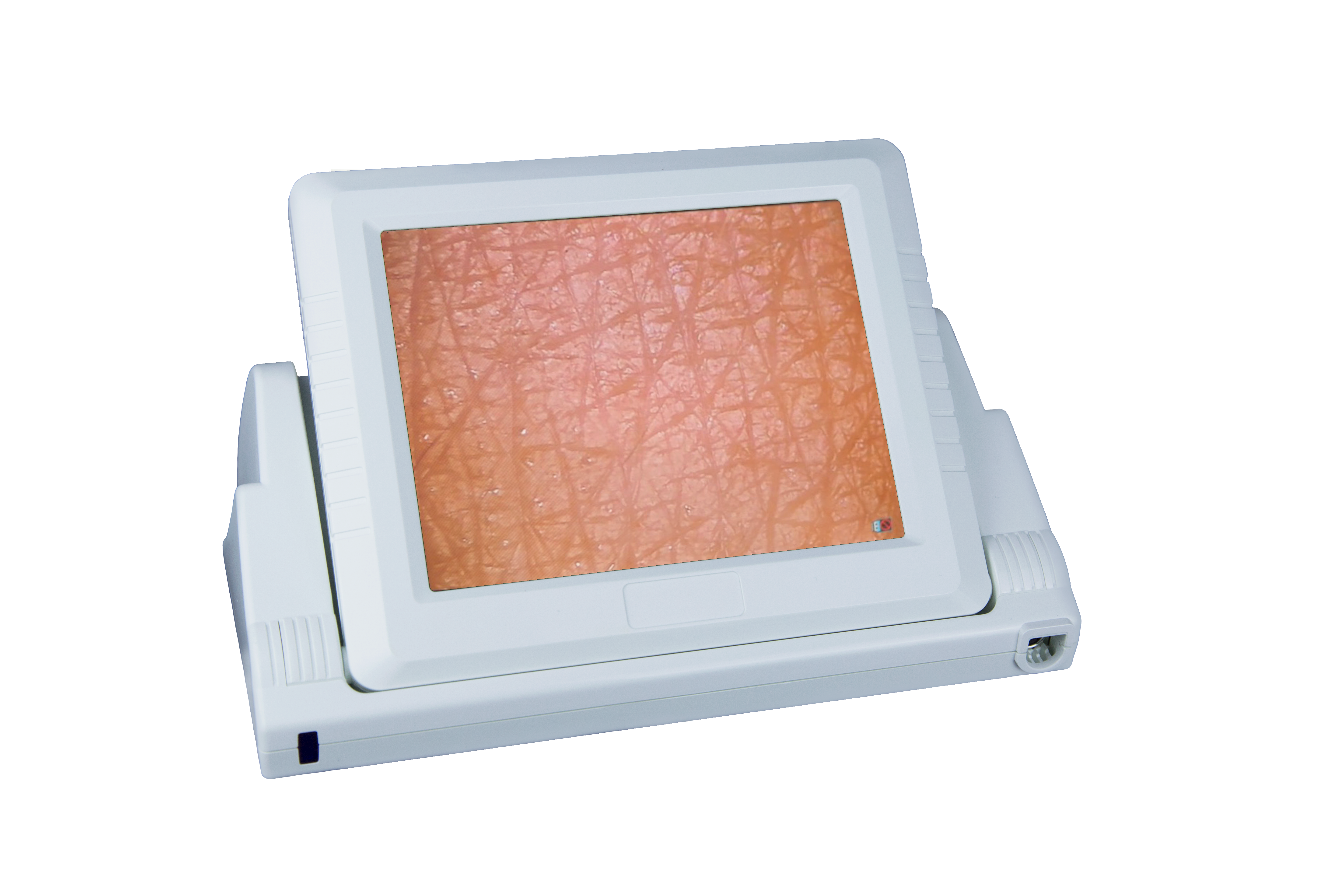
Choosing a skin and scalp analyzer depends entirely on your specific business model. You must align the hardware form factor with your daily clinical environment. A mismatch here leads to severe operational bottlenecks.
These robust, stationary machines are best suited for high-end medspas and dedicated dermatology clinics. They offer comprehensive, full-face mapping capabilities. These terminals operate in highly controlled lighting environments. They physically block out ambient room light to ensure perfect consistency. You typically get distinct RGB, UV, and cross-polarized light modes executing in a rapid sequence. This ensures seamless and highly accurate patient profile tracking over several years. However, these benefits come with trade-offs. They demand a dedicated, permanent physical space in your consultation room. They also require a significantly higher initial capital expenditure compared to mobile units.
Conversely, mobile setups are ideal for busy hair salons, trichology startups, and mobile aestheticians. A handheld hair follicle camera offers massive portability. It presents a much lower barrier to entry for new business owners. This format is excellent for highly targeted scalp examinations. You can move the probe directly over problem areas like the crown or hairline effortlessly.
However, you must manage specific limitations. Ambient lighting variability can easily skew before-and-after comparisons. If you scan a client near a sunny window in June and in a dark room in December, the software will struggle to compare the data accurately. These units also rely heavily on external tablets or monitors. You must ensure your clinic's Wi-Fi or Bluetooth connections remain perfectly stable during busy hours.
Device Format Comparison Guide
Feature Category | Integrated Desktop AI Terminals | Handheld Hair Follicle & Skin Probes |
|---|---|---|
Ideal Clinical Setting | Medspas, dermatology clinics, premium aesthetic centers | Hair salons, trichology startups, mobile aestheticians |
Lighting Environment | Highly controlled internally (RGB, UV, Polarized) | Highly subject to ambient room lighting fluctuations |
Hardware Portability | Low (requires dedicated counter space) | High (easily movable between treatment rooms) |
Core Diagnostic Strength | Full-face mapping, consistent longitudinal data | Targeted follicle exams, low barrier to entry |
It is easy to get lost in glossy marketing brochures. Clinic owners must evaluate diagnostic tools based on actual clinical utility rather than flashy buzzwords.
Look far beyond basic camera specifications. Multi-spectral lenses are absolutely essential for any professional practice. They let you see beneath the superficial epidermal layer. You need strong cross-polarized light to evaluate vascular conditions accurately. This light strips away surface glare to reveal hidden redness and rosacea triggers. UV light is equally critical for aesthetic success. It highlights porphyrins and acne-causing bacteria. It also reveals underlying melanin clusters before they surface as visible pigmentation.
You must also understand megapixel and magnification realities. Look for a minimum of 20MP for detailed facial mapping. For scalp diagnostics, demand true 50x to 200x optical magnification. Ignore inflated digital zoom claims from aggressive sales pitches. Digital zoom simply pixelates the image without adding new diagnostic detail. You must demand precise optical resolution specifications to guarantee valid clinical assessments.
The hardware captures the image, but the software drives the consultation. The built-in AI should quantify highly specific, treatable concerns. It should accurately measure wrinkle depth, pore count, and localized moisture levels. Avoid software systems that provide arbitrary, gamified "skin ages." A generic score of "Your skin is 45 years old" does not help you formulate a medical-grade treatment plan. Actionable metrics give you real diagnostic power.
Customization serves as another vital software requirement. Ask vendors if their system accommodates your clinic’s specific product lines. Can you program the software to recommend your exact chemical peels or laser treatments? A customized software flow makes the final upsell feel completely natural. It bridges the gap between diagnosis and immediate retail purchase.
Patient privacy cannot be an afterthought in today's regulatory landscape. If the diagnostic software utilizes cloud storage, you must verify local data compliance strictly. Medical clinics operating in the United States must ensure HIPAA compliance. European salons need strict GDPR adherence regarding biometric data storage. Breaching these regulations carries severe financial penalties and destroys patient trust.
Additionally, assess data portability carefully before signing any contracts. You must know if patient files can export easily. Can the captured images integrate directly into your existing CRM system? A closed software ecosystem traps your patient data. It creates massive operational headaches if you decide to change hardware vendors three years down the line.
Your ongoing relationship with the vendor dictates your long-term success. Choosing between a direct manufacturer and a third-party reseller is a critical early decision.
Working directly with a reputable skin and scalp analyzer manufacturer provides distinct advantages. You ensure much faster firmware updates. You receive direct warranty support without frustrating middleman delays. Crucially, replacement components remain available much longer. Resellers often white-label generic equipment. They frequently lack the engineering access needed to fix deep software bugs.
When evaluating any potential skin analysis camera supplier, follow this vetting sequence:
Verify their core engineering background and actual production facilities.
Ask for documented case studies from similarly sized clinics.
Confirm their replacement part inventory and typical shipping lead times.
Test their technical support responsiveness by asking complex questions before signing a contract.
For franchised clinics or private-label skincare brands, custom manufacturing is highly lucrative. You can actively explore OEM skin analyzer opportunities. OEM and ODM manufacturers let you customize the hardware casing to match your clinic's aesthetic. You can tailor the user interface with your exact brand colors and logos. Some advanced manufacturers even allow you to adjust proprietary algorithmic weighting. This ensures the machine aligns perfectly with your distinct in-house treatment philosophy and product formulations.
Finally, scrutinize their support and training Service Level Agreements (SLAs). Advanced hardware is completely useless without comprehensive staff software fluency. You must mandate a documented onboarding timeline.
Key SLA requirements include:
Comprehensive digital training manuals for all new hires.
Guaranteed response times for critical technical support tickets.
Live virtual onboarding sessions for the entire clinical team.
Regular software and AI algorithm updates explicitly included in the contract terms.
Purchasing the equipment is only the first step. Actual clinic adoption presents several distinct, often overlooked challenges.
The most common pitfall is the dreaded "shelf-ware" risk. Overly complex software interfaces frustrate practitioners immensely. If a device requires five minutes to boot up, calibrate, and sync, staff will quickly abandon it. They will revert to fast, subjective visual checks during busy Saturday shifts. To prevent this, prioritize a highly intuitive user interface. Ensure the entire scan process, from patient creation to final report generation, takes under 30 seconds.
Standardizing the lighting environment represents another massive implementation hurdle. This is particularly true for handheld mobile units. Ambient room lighting drastically impacts image consistency and algorithm accuracy. If a client sits near a sunny window today and in a dark room next month, the analytical data becomes invalid. You cannot run accurate before-and-after comparisons. You must establish strict Standard Operating Procedures (SOPs). Define exactly where and how staff conduct scans. Many successful clinics install blackout curtains and place tape markers on the floor. This guarantees the client chair and the handheld device remain at a fixed distance, ensuring valid longitudinal data every single time.
Lastly, set realistic expectations regarding your financial return. The ROI timeline is rarely instant. It typically requires 4 to 6 weeks of consistent daily use. Staff need this critical time to build confidence in the technology. They must learn how to weave the analytical data seamlessly into their upsell scripts. They need practice handling client objections using visual evidence. Once your team masters this narrative, your consultation conversions and retail sales will rise steadily.
Investing in diagnostic equipment elevates your practice dramatically. It transitions your entire clinic from offering subjective care to commanding undeniable clinical authority. Data-driven consultations build profound trust, strip away sales friction, and secure long-term patient loyalty. They prove your treatments work.
To move forward effectively, follow these actionable next steps. First, shortlist two to three reputable manufacturers based on your clinical space requirements and daily patient volume. Second, request live virtual demonstrations using unedited, real-time scanning footage rather than pre-packaged marketing videos. Third, demand a clear, transparent breakdown of any annual software licensing fees versus initial hardware costs. Finally, establish internal SOPs for your scanning environments before the device even arrives at your clinic.
A: Medical-grade devices typically feature higher optical sensor calibration and stricter data compliance. They often have peer-reviewed validation supporting their diagnostic algorithms. They detect deep clinical pathology. In contrast, salon-grade units focus primarily on general cosmetic assessments. They offer simplified, fast interfaces tailored for rapid retail product recommendations rather than deep dermal analysis.
A: Purchasing a scalp analysis machine wholesale is highly cost-effective for large multi-location rollouts. However, it demands robust internal IT support to manage the devices independently. Buying directly from an established brand often includes essential warranties, dedicated clinical training, and ongoing software support, which greatly benefits single-location clinics.
A: It varies significantly by supplier. Cloud-based AI systems often charge a monthly or annual SaaS fee. This covers continuous algorithm updates and secure cloud storage. Conversely, localized software may only require a one-time purchase upfront with the hardware. Always clarify the exact software licensing structure during the initial quoting stage to avoid surprises.

