
English 


Author: Site Editor Publish Time: 2026-11-16 Origin: Site


The cosmetic dentistry market is currently saturated with entry-level light devices. Manufacturers often claim these cheap units deliver clinical-grade results. However, reality paints a very different picture. For dental practices and high-end cosmetic spas, investing in sub-standard equipment poses massive clinical risks. Poor devices lead to inconsistent patient outcomes. They cause heightened tooth sensitivity. Ultimately, they diminish your clinical credibility rapidly. You cannot afford to compromise patient safety or professional reputation. A genuinely professional device must bridge the gap between robust chemical activation and strict patient safety. It guarantees predictable shade improvements. It adheres strictly to medical-grade compliance and rigorous thermal regulation standards. This comprehensive guide establishes an evidence-oriented evaluation framework. We will help you separate true commercial-grade assets from mere consumer-level gimmicks.
Professional-grade machines utilize specific nanometer (nm) wavelengths (typically 460–490nm for blue light) to safely accelerate peroxide-based gels without compromising enamel integrity.
Advanced systems function as a constant temperature whitening machine to prevent pulp overheating and minimize post-operative patient sensitivity.
Procurement evaluation must extend beyond light intensity to include ergonomic adjustability, cross-contamination protocols, and regulatory compliance (FDA/CE).
High-density LED technology has largely replaced legacy halogen and UV systems due to superior diode lifespan and targeted emission spectra.
Many practitioners struggle to articulate the difference between consumer devices and professional systems. Patients often ask why they cannot just use over-the-counter mouthpieces. You must understand the specific technological gap. Consumer mouthpieces output very low milliwatts. They barely illuminate the gel surface. In stark contrast, in-office professional systems deliver high-intensity, sustained output. This immense energy difference directly affects clinical outcomes.
Let us examine the exact mechanism of action. A clinical-grade Dental Whitening Accelerator specifically interacts with photo-initiators. These chemical triggers sit inside professional hydrogen or carbamide peroxide gels. When struck by the correct light frequency, they speed up oxidation. The rapid oxygen release physically breaks down intrinsic stain molecules deep within the dentin. This process requires massive, sustained photonic energy. Consumer devices simply cannot generate this required energy density.
We need an evidence-oriented reality check here. The light itself never whitens teeth. It simply catalyzes the chemical reaction. Therefore, the value of the machine lies entirely in optimization. It must activate chemicals safely. It must perform consistently across every patient session. Relying on sub-standard lights leads to uneven oxidation. You will see patchy shade improvements.
Common Mistakes in Clinical Practice:
Assuming consumer-grade lights share the same internal diode architecture.
Failing to explain the activation mechanism to patients during consultations.
Using low-output devices with high-concentration gels, leading to chemical burns rather than efficient oxidation.
Professionals must evaluate the standard 460–490nm blue light spectrum. This range represents the gold standard for standard whitening procedures. It perfectly matches the absorption peak of most commercial photo-initiators. Blue light penetrates the translucent enamel effectively. It reaches the dentin layer seamlessly.
You should also assess multi-spectrum capabilities. Some modern devices include red light (620–650nm). Red light delivers profound tissue-soothing benefits. It offers vital anti-inflammatory properties for the gums. Additionally, purple light (390–410nm) provides broader chemical activation. It triggers alternative catalysts found in modern boutique gels. Multi-spectrum devices offer superior clinical flexibility.
Spectrum Efficacy Chart
Light Color | Wavelength (nm) | Primary Clinical Function |
|---|---|---|
Blue Light | 460–490nm | Primary photo-initiator activation; accelerates peroxide oxidation. |
Red Light | 620–650nm | Tissue soothing; reduces gingival inflammation post-treatment. |
Purple Light | 390–410nm | Broad-spectrum activation; triggers modern boutique gel catalysts. |
Raw wattage often misleads buyers. Manufacturers boast about high wattage. However, the number and quality of LEDs matter significantly more. Tier-1 diodes provide pure spectral output. They resist structural degradation over time. High-density arrays ensure intense, focused light.
You must also highlight the importance of a uniform light distribution curve. A flat smile line does not exist. The human arch curves organically. The light must curve alongside it. This ensures even activation across the entire smile line. The span from bicuspid to bicuspid requires uniform irradiance. Dark spots lead to uneven shade improvements. Premium arrays bend the light precisely.
A premium LED Whitening Lamp demands variable intensity settings. You typically see Low, Medium, and High options. These settings accommodate varying patient sensitivity levels. Enamel thickness varies wildly between patients. A young patient might need lower intensity. An older patient might tolerate higher settings. Adjustability guarantees patient safety. It allows you to tailor the treatment perfectly.
Best Practices for Device Settings:
Always start new patients on a medium setting to gauge thermal tolerance.
Switch to low intensity if the patient reports immediate zingers or sharp pains.
Reserve high intensity for thick enamel profiles and stubborn intrinsic stains.
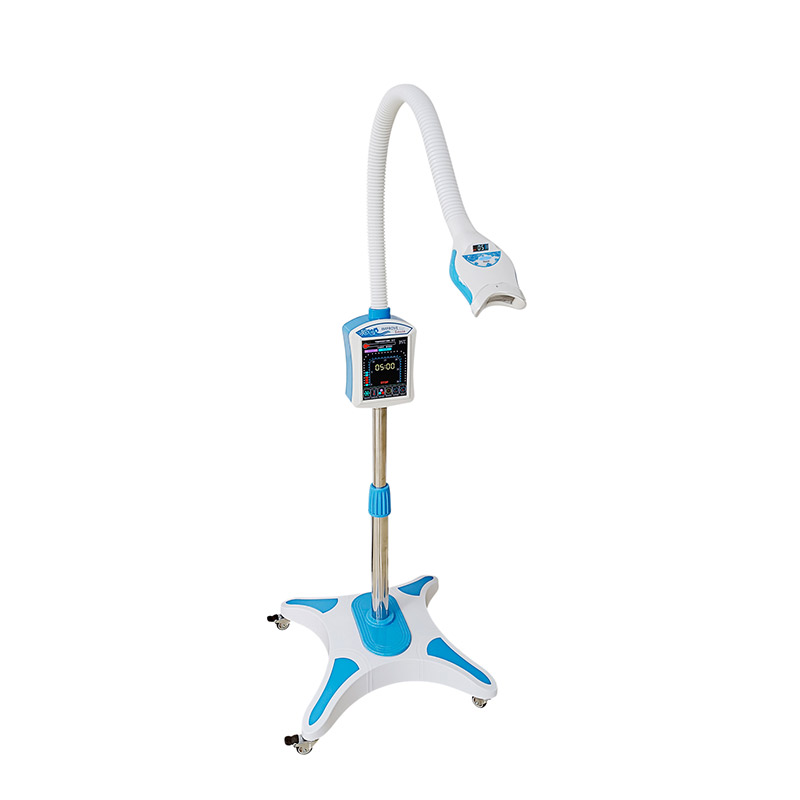
Legacy laser and halogen systems generated enormous heat. They posed severe clinical risks. Excessive heat generation leads directly to pulpitis. It causes rapid tooth dehydration. In extreme cases, it creates micro-cracks in the enamel. Modern practices cannot accept these liabilities.
We must outline these specific clinical risks clearly:
Pulpitis: Inflamed dental pulp triggers excruciating pain. Heat penetrates the dentin rapidly.
Dehydration: Extreme moisture loss makes teeth appear chalky white temporarily. This tricks you into seeing false results.
Micro-cracks: Thermal expansion creates invisible fissures. These fissures harbor bacteria later.
How do we solve this thermal crisis? Integrated microprocessors step in. They monitor diode heat emission in real time. They regulate the cooling fans and diode power synchronously. This seamless coordination creates a true Constant Temperature Whitening Machine. It locks the operational heat strictly below the danger threshold. The device automatically adjusts output if ambient temperatures rise.
Maintaining a consistent, safe thermal environment changes everything. It prevents the whitening gel from breaking down too rapidly. Rapid breakdown spikes sensitivity violently. A steady, controlled oxidation release ensures deeper stain penetration. It drastically reduces post-treatment sensitivity. Your patients stay comfortable throughout the hour. They recommend your clinic to others.
Furthermore, gel stability ensures chemical predictability. When heat fluctuates, peroxide behaves erratically. Constant thermal conditions yield highly predictable shade improvements. You can promise results confidently.
Clinicians need multi-jointed, drift-free suspension arms. These arms must hold positions perfectly. Precise focal distance matters immensely. The light head should sit just millimeters from the retractor. You cannot allow structural drift. If the arm sags, efficacy drops immediately. High-quality arms allow positioning without patient claustrophobia. They maneuver smoothly around the patient's head. Cheap arms require constant manual readjustment. This interrupts the clinical workflow constantly.
Hygienic design protects everyone in the clinic. You must evaluate cross-contamination protocols rigorously. Flat-panel touch screens eliminate crevices. Bacteria cannot hide on flat glass. Physical buttons trap debris easily. Autoclavable silicone muzzles allow for medical-grade sterilization. You detach them and sanitize them thoroughly.
Furthermore, compatibility with disposable barrier sleeves is essential. You slip them on before the session. You discard them immediately after use. This maintains the highest infection control standards.
Clinics must differentiate between mounting styles. Mobile wheelbase units work best for multi-operatory sharing. You roll them down the hall easily. They feature locking casters for stability. Conversely, dental chair-mounted systems suit dedicated cosmetic suites. They attach directly to the delivery unit. They save valuable floor space. They look permanently integrated.
Footprint and Mobility Comparison Chart
System Type | Ideal Clinical Setting | Primary Advantage | Primary Limitation |
|---|---|---|---|
Mobile Wheelbase | Multi-operatory practices | Easy sharing across different rooms. | Consumes floor space; requires cable management. |
Chair-Mounted | Dedicated cosmetic suites | Zero floor footprint; seamless integration. | Fixed location; cannot be shared easily. |
Tabletop Units | Small spas or tight spaces | Highly portable; easy storage. | Lacks long articulated reach; awkward positioning. |
Do not ignore regulatory clearances during procurement. They represent a strictly non-negotiable need. You must look for explicit FDA Class I or II registration. CE certification proves adherence to European safety standards. ISO 13485 manufacturing standards indicate a highly controlled factory environment. These standards guarantee rigorous quality control.
A true Professional Teeth Whitening Machine carries these documents proudly. Manufacturers display them openly. Uncertified devices pose massive liability risks. If an uncertified unit burns a patient, your malpractice insurance may refuse coverage. Always demand physical copies of compliance certificates before finalizing any equipment selection.
Assess the ecosystem carefully. Is the machine an "open system"? Open systems are universally compatible with various professional gel brands. You can use Zoom, Opalescence, or bespoke boutique gels. They offer massive supply chain freedom. You source gels based on patient needs.
Alternatively, a "closed system" requires proprietary consumables. Closed systems lock you into their specific ecosystem. They often utilize digital DRM chips on the light guides. Open systems usually provide better long-term clinical flexibility. You adapt to new chemical advancements quickly. You never remain stuck with obsolete gel formulas. Choose versatility to future-proof your clinic.
A professional teeth whitening machine is not defined by its aesthetic casing. Real clinical value lies exclusively in its thermal regulation, spectral accuracy, and compliance certifications. Beautiful plastic shells mean nothing without robust internal engineering. True clinical devices protect the dental pulp while maximizing chemical oxidation.
Take these action-oriented next steps to ensure successful equipment integration:
Request detailed technical specification sheets from manufacturers immediately.
Demand explicit diode origins and independent thermal testing data before purchase.
Ask for third-party clinical trial evidence to verify shade improvement claims.
Arrange an in-clinic demo to test the articulated arm's mechanical stability.
Verify all FDA and CE compliance certificates through official regulatory databases.
A: No. High wattage often equates to wasted energy and excessive heat. Diode quality, specific nanometer targeting, and light uniformity are far more critical than raw wattage. Excessive wattage increases the risk of pulpitis without improving shade outcomes.
A: Commercial-grade LED modules typically offer between 30,000 to 50,000 hours of continuous use before experiencing significant light degradation. High-quality diodes maintain their specific wavelength accuracy throughout this entire operational lifespan.
A: While it cannot eliminate sensitivity caused by the peroxide's chemical action, it effectively removes heat-induced pulp inflammation. This makes the procedure significantly more tolerable for patients with pre-existing hypersensitivity.
A: Most modern LED accelerators are "open systems" that work with any gel containing photo-initiators reactive to the 460-490nm spectrum. However, certain legacy brands require proprietary light-gel pairings to function properly.


